Fluidkey incident window: What two Ethereum transfers show

November 23, 2026
Two Ethereum transactions, 24 seconds apart, moved 7.882003 USDT to the same contract during the reported November 19 Fluidkey incident window. The receipts establish the amounts, timing and direction. They do not establish that either transfer was unauthorized or that the recipient was connected to the reported theft.
What the two receipts establish
SentinelTX examined activity from 17:28 to 18:05 UTC on November 19, 2026. Both Ethereum transactions succeeded. Their token transfers ran from the same sender to the same receiving contract. The amount for each receipt is the USDT transfer recorded inside the transaction, not the ETH value attached to the outer call.
Ethereum receipt 1: 17:28:59 UTC · Block 26,450,627 · 2.373948 USDT · Open receipt
Ethereum receipt 2: 17:29:23 UTC · Block 26,450,629 · 5.508055 USDT · Open receipt
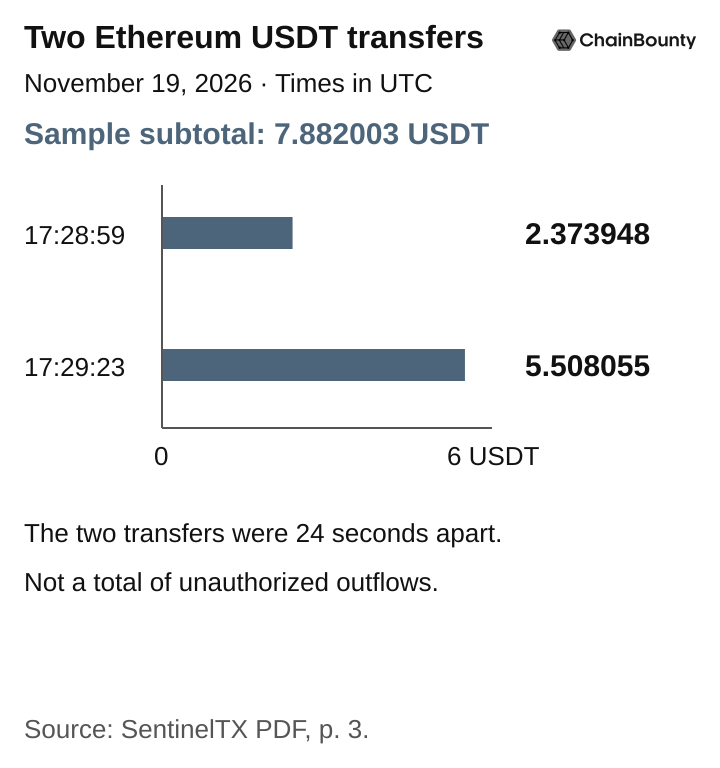
Figure 1. Two Ethereum receipts in the reviewed window. The total is for these two observations only. Source: SentinelTX, pp. 3–4.
The receiving contract has no established role in this analysis. Its presence in two successful receipts does not identify its operator or establish why it received the funds. Neither transfer should be counted as a verified theft.
Why 89 calls do not mean 89 payouts
A separate Ethereum scan counted 89 calls from one signer to the same transaction-submission contract. They spanned 17:28:59 to 18:04:59 UTC. The aggregate records zero ETH sent with those calls. That does not mean every call moved zero tokens: an outer transaction can carry no ETH while a token moves inside it.
The scan did not enumerate all 89 transaction hashes and token-transfer records. It cannot establish 89 payouts, 89 victims or a USDT total across the window.
What remains outside the evidence
Bitquery’s separate investigation estimated that at least $1.58 million reached wallets it attributed to the attacker across six chains. That estimate uses a different scope. The two receipts and the aggregate call count neither establish nor revise it.
The SentinelTX review did not substantiate an in-window Base transfer or an exchange cash-out. That is a limit of the examined records, not a finding that there was no Base activity or that funds never reached an exchange. The latest evidence retrieval in the report was November 23 at 00:07:15 UTC; it makes no claim about later movements or recovery.
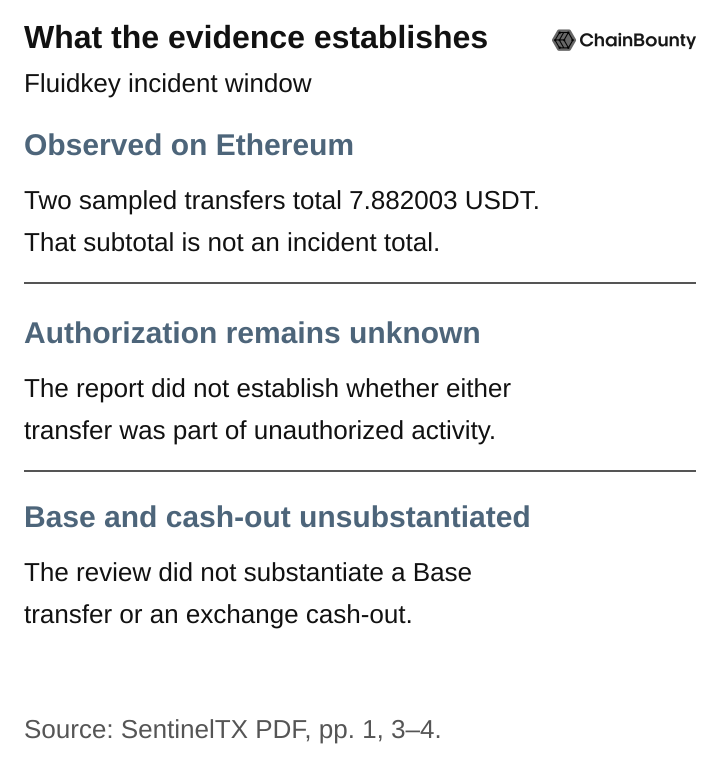
Figure 2. What the reviewed records establish and where the evidence stops. Source: SentinelTX, pp. 3–4, 7–8 and 12–13.
The distinction matters for incident response: two receipts can prove that USDT moved without proving that it was stolen. To classify additional transfers, investigators would need the individual token-transfer records and evidence tying each recipient to the incident.
Source note: SentinelTX, “Fluidkey Incident Window: Ethereum Transfer Evidence,” November 23, 2026.
 0
 0
10 reads

 Become an Investigator